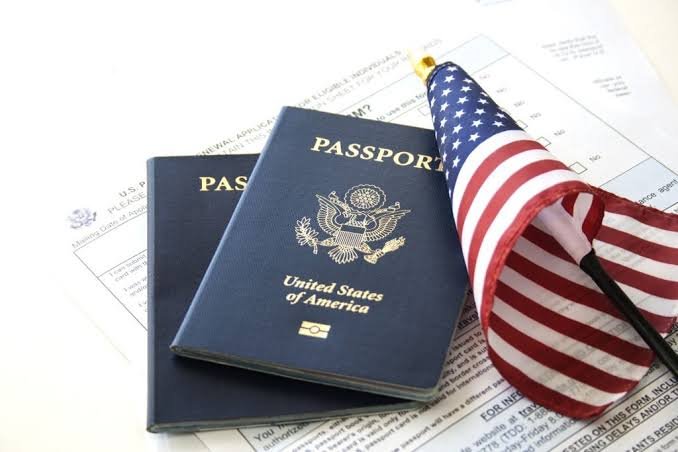
U.S Visa Sponsorship Opportunities in 2025
U.S Visa Sponsorship Opportunities in 2025
The United States remains the premier global destination for skilled professionals, students, and workers worldwide. Securing visa sponsorship is the critical first step in legally accessing the American job market, often leading to a pathway to permanent residency. In 2025, visa sponsorship remains both highly competitive and widely available across various industries due to strategic U.S. labor shortages, especially in technical and healthcare fields. Understanding the precise legal routes and the strict requirements set by U.S. Citizenship and Immigration Services (USCIS) and the Department of Labor (DOL) is essential for any international applicant.
What is U.S. Visa Sponsorship?
Visa sponsorship is a mandatory legal process where a U.S. entity—typically an employer—petitions the U.S. government on behalf of a foreign national to authorize their work or stay in the country. This formal action provides the foreign worker with the necessary legal status (a visa) to enter and commence employment.
The core responsibility of the employer in most work visa cases is to:
-
File a Petition: Submit the necessary forms to USCIS (e.g., Form I-129 for temporary workers or Form I-140 for permanent workers).
-
Demonstrate Need: Prove that the job requires specialized skills and that hiring the foreign national will not negatively affect the wages or working conditions of U.S. workers (Prevailing Wage requirement).
-
Cover Costs: The employer is legally required to cover certain filing fees and legal costs related to the immigration petition.
Why 2025 is a Good Year to Apply
The U.S. job market, particularly in STEM (Science, Technology, Engineering, and Mathematics) and healthcare, continues to experience significant shortages. Government policies are continually adjusted to address these gaps:
-
Focus on STEM and Healthcare: These sectors receive priority processing and often have slightly more favorable sponsorship conditions.
-
Increased Demand for Permanent Workers: Growth in EB-3 Green Card sponsorship reflects an urgent need for long-term talent, from skilled tradespeople to highly credentialed professionals.
-
Digital Recruitment: The shift to remote and hybrid work models means U.S. recruiters are more open to interviewing and hiring candidates globally than ever before.
Types of U.S. Visas That Offer Sponsorship in 2025
The U.S. offers numerous visa categories for sponsored workers, categorized by skill level, educational background, and the permanent or temporary nature of the job.
1. H-1B Visa – Specialty Occupations (Temporary)
-
Purpose: For skilled workers in professional fields requiring at least a Bachelor’s degree (e.g., IT, Finance, Engineering, Medicine).
-
Sponsor: U.S. employer.
-
Cap: Subject to an annual cap of 85,000 visas, requiring employers to participate in an annual lottery system.
-
Validity: Up to 3 years, extendable to 6 years, with a direct path to Green Card sponsorship (via EB-2/EB-3).
2. O-1 Visa – Individuals with Extraordinary Ability (Temporary)
-
Purpose: For individuals with demonstrated national or international acclaim in fields like science, arts, business, or education.
-
Sponsor: U.S. employer or agent.
-
Benefit: Not subject to the annual visa cap. Excellent path to Green Card (via EB-1).
3. EB-3 Visa – Skilled, Unskilled, and Professional Workers (Permanent/Green Card)
-
Purpose: Permanent residence for workers with varying degrees of skill, where a U.S. employer has proven an inability to find a qualified U.S. worker.
-
Sponsor: U.S. employer.
-
Process: Requires a PERM Labor Certification from the DOL to verify the prevailing wage and the unavailability of U.S. workers.
-
Sub-categories: Includes professionals, skilled workers (2 years training/experience), and unskilled workers (requires less than 2 years of experience).
4. H-2B Visa – Temporary Non-Agricultural Workers (Seasonal)
-
Purpose: For seasonal or short-term, non-agricultural jobs when employers prove a temporary labor shortage (e.g., hospitality, cleaning, landscaping).
-
Sponsor: U.S. employer (must prove temporary labor need).
-
Cap: Subject to an annual cap, often reached quickly.
-
Path to Green Card: Rare, but possible if the employer sponsors a subsequent EB-3 petition.
5. J-1 Visa – Exchange Visitor
-
Purpose: For educational or cultural exchange, including interns, trainees, teachers, and researchers.
-
Sponsor: Designated J-1 program sponsor (university, government agency, or NGO).
-
Note: Often subject to a two-year home residency requirement (meaning the visa holder must return home for two years before changing status), though waivers are possible.
6. L-1 Visa – Intra-Company Transferees
-
Purpose: For executives, managers, or specialized knowledge employees of a multinational company to transfer from a foreign branch to a U.S. office.
-
Sponsor: Same employer (must have qualifying foreign and U.S. branches).
-
Benefit: Provides a strong, direct path to Green Card without needing a PERM certification.
Top Industries and Employers Offering Visa Sponsorship in 2025
Visa sponsorship is heavily concentrated in industries facing chronic labor shortages and requiring highly specialized education.
1. Information Technology (IT) & Software
The IT sector remains the largest sponsor of foreign talent, predominantly utilizing the H-1B visa for highly specialized roles.
-
Roles: Software Developers, Data Scientists, Cybersecurity Analysts, Cloud Engineers, and specialized IT Consultants.
-
Top Sponsoring Companies: Google, Amazon, Microsoft, Apple, Meta, and major consulting firms like Tata Consultancy Services (TCS), Infosys, and Cognizant.
2. Healthcare & Nursing
The severe shortage of healthcare professionals across the U.S. drives high demand for sponsorship, particularly using the EB-3 Green Card and H-1B for specialized roles.
-
Roles: Registered Nurses (RNs), Physical Therapists, Medical Scientists, and Caregivers/Assistants.
-
Top Employers: HCA Healthcare, Mayo Clinic, Kaiser Permanente, Johns Hopkins Hospital, and various nursing staffing agencies.
3. Engineering, Construction & Manufacturing
Demand for civil, mechanical, and industrial engineers is constant, utilizing H-1B and often the EB-3 Skilled Worker category for long-term hires.
-
Roles: Civil Engineers, Welders, Industrial Engineers, Automotive Specialists, and Skilled Trades Supervisors.
-
Top Sponsors: Bechtel Corporation, Jacobs Engineering, Fluor Corporation, General Electric (GE), and leading U.S. manufacturing firms.
4. Logistics & Trucking
Due to an aging workforce and booming e-commerce, long-haul truck drivers are increasingly being sponsored for EB-3 Unskilled/Skilled Worker visas.
-
Roles: Commercial Truck Drivers, Warehouse Managers, and Logistics Analysts.
-
Top Sponsors: NFI Industries, J.B. Hunt Transport, CRST International, and other major transportation companies.
5. Education & Research
Universities, public school districts, and research institutions sponsor visas for educators and academic scholars.
-
Roles: University Professors, Post-doctoral Researchers (J-1/H-1B), and K-12 Teachers (especially in STEM and special education).
-
Top Sponsors: Major U.S. public school districts and top universities (Harvard, MIT, Stanford, state university systems).
Salary Scale for Immigrants Working in the USA
U.S. labor law mandates that employers pay sponsored workers the Prevailing Wage—the average wage paid to similarly employed workers in a specific occupation in the intended area of employment—or the actual wage paid to other workers with similar experience, whichever is higher.
This ensures foreign workers are not paid less than their American counterparts. While salaries vary widely by location (e.g., Silicon Valley vs. Rural Midwest) and skill, here are realistic estimated ranges for sponsored workers:
| Occupation | Estimated Salary Range (USD/year) | Common Visa Types |
| Software Engineers (Mid-Level) | $90,000 – $140,000 | H-1B, L-1, EB-2 |
| Registered Nurses | $70,000 – $105,000 | EB-3, H-1B |
| Financial Analysts/Accountants | $65,000 – $100,000 | H-1B, EB-2 |
| EB-3 Skilled Trades (Electrician, Plumber) | $45,000 – $75,000 | EB-3, H-2B |
| EB-3 Unskilled Workers (Seasonal/Caregivers) | $30,000 – $45,000 | EB-3, H-2B |
| University Researchers/Postdocs | $50,000 – $80,000 | J-1, H-1B |
Note on Location: A software engineer earning $140,000 in San Francisco may have the same effective disposable income as one earning $90,000 in Dallas, Texas, due to the difference in the cost of living.
Documents and Eligibility Criteria for U.S. Visa Sponsorship in 2025
Meeting the eligibility criteria and preparing accurate documentation are the applicant’s primary responsibilities.
General Eligibility Criteria for Sponsored Visas
-
Valid Job Offer: A permanent or temporary job offer from an employer legally authorized to sponsor.
-
Required Education/Skill: You must meet the minimum educational or professional experience level for the specific visa (e.g., Bachelor’s for H-1B, 2 years experience for EB-3 Skilled).
-
No Immigration Violations: A clean record regarding previous U.S. immigration status or denial history.
Essential Applicant Documents
-
Valid Passport: Must be valid for at least 6 months beyond the intended period of stay.
-
Academic Credentials: Original degree certificates and transcripts. For foreign degrees, an official credential evaluation report confirming U.S. equivalence is required.
-
Proof of Experience: Reference letters, employment verification letters, and tax documents from previous employers confirming professional experience (especially vital for EB-3 and L-1 visas).
-
DS-160 Confirmation: The confirmation page of the online nonimmigrant visa application.
-
Passport Photos: Two recent U.S. visa-style photographs.
-
Proof of Fees Paid: Receipts for the visa application fee (MRV fee) and SEVIS fee (if applicable).
Employer-Filed Documents (Petitions)
The employer is responsible for filing the legal documents that make up the petition:
-
Form I-129 / I-140: The core petition forms.
-
Labor Certification: Approved LCA (for H-1B) or PERM (for EB-3).
-
I-797 (Notice of Action): The official USCIS approval notice the applicant needs for the visa interview.
Timeline and Process: From Job Offer to Visa Approval in 2025
The U.S. visa process is multi-stage, often spanning several months, depending heavily on the visa type and government processing times.
| Visa Type | Total Time (Est.) | Key Milestones |
| H-1B (Specialty Occupations) | 6–12 months | Lottery, LCA, USCIS Petition Filing (I-129), Consular Interview. |
| EB-3 (Green Card) | 12–24 months + wait time | PERM Labor Certification (10+ months), I-140 Petition, Adjustment of Status/Consular Processing. |
| L-1 (Transfer) | 3–6 months | I-129 Petition, Consular Interview. |
| H-2B (Seasonal) | 3–6 months | Temporary Labor Certification, USCIS Petition. |
Step-by-Step Breakdown:
-
Secure Job Offer (1-3 Months): Application and interview process.
-
Employer Files Labor Certification (2-10 Months): DOL processes the LCA or PERM. This is often the longest step for Green Card applications.
-
USCIS Files Petition (2-4 Months): Employer files I-129 or I-140. Premium processing (15-day decision) is available for an extra fee for some visas.
-
Visa Interview (2-6 Weeks): Applicant schedules and attends the interview at the U.S. Embassy/Consulate with the approved I-797 notice.
-
Visa Approval and Travel: Passport is stamped with the visa, allowing travel to the U.S.
Common Challenges and How to Overcome Them (Visa Denials, RFEs & More)
Even with employer support, the U.S. visa process presents several hurdles:
1. Request for Evidence (RFE)
-
Challenge: USCIS requests additional documentation (e.g., proving the specialty nature of the job, the equivalence of a foreign degree, or the employee’s experience).
-
Solution: Work closely with the employer’s immigration attorney. RFEs are common and require a precise, documented, and timely response.
2. Visa Denial
-
Challenge: The Consular Officer denies the visa, often due to a failure to prove strong “ties to the home country” (for non-immigrant visas like H-1B or J-1) or inconsistencies in the application.
-
Solution: Be prepared with documentary evidence of assets, family, or business interests in the home country. Honesty and consistency during the interview are paramount.
3. Lottery Selection (H-1B)
-
Challenge: Due to the annual cap, H-1B selection is done by lottery, meaning a qualified candidate may not be selected.
-
Solution: Explore alternative routes such as the O-1, L-1, or EB-3 (if the employer is willing to pursue permanent sponsorship immediately).
4. Delays
-
Challenge: USCIS and DOL backlogs can extend processing times far beyond the stated estimates.
-
Solution: Start the application process as early as possible and avoid booking flights until the visa is stamped in the passport.
Conclusion
U.S. visa sponsorship opportunities in 2025 are abundant, driven by specific labor needs in sectors like technology and healthcare. While highly competitive, the system provides clear, defined legal pathways for skilled workers through visas like the H-1B, L-1, and the permanent EB-3 Green Card. Success hinges on obtaining a strong job offer from a licensed sponsor and meticulously adhering to the strict documentation and prevailing wage requirements set by the U.S. government.